Palimpsest

This installation is a counter-map—a research-driven artwork that challenges conventional cartography by treating the river as a living archive to be experienced through direct engagement. Walking its surroundings, kayaking its waters, collecting samples, and magnet fishing for river gifts, I immerse myself in the river’s ongoing narrative. The Chicago River carries memory, struggle, and a profound connection to the land, not to a territory.

Researching The Chicago River Ecosystem
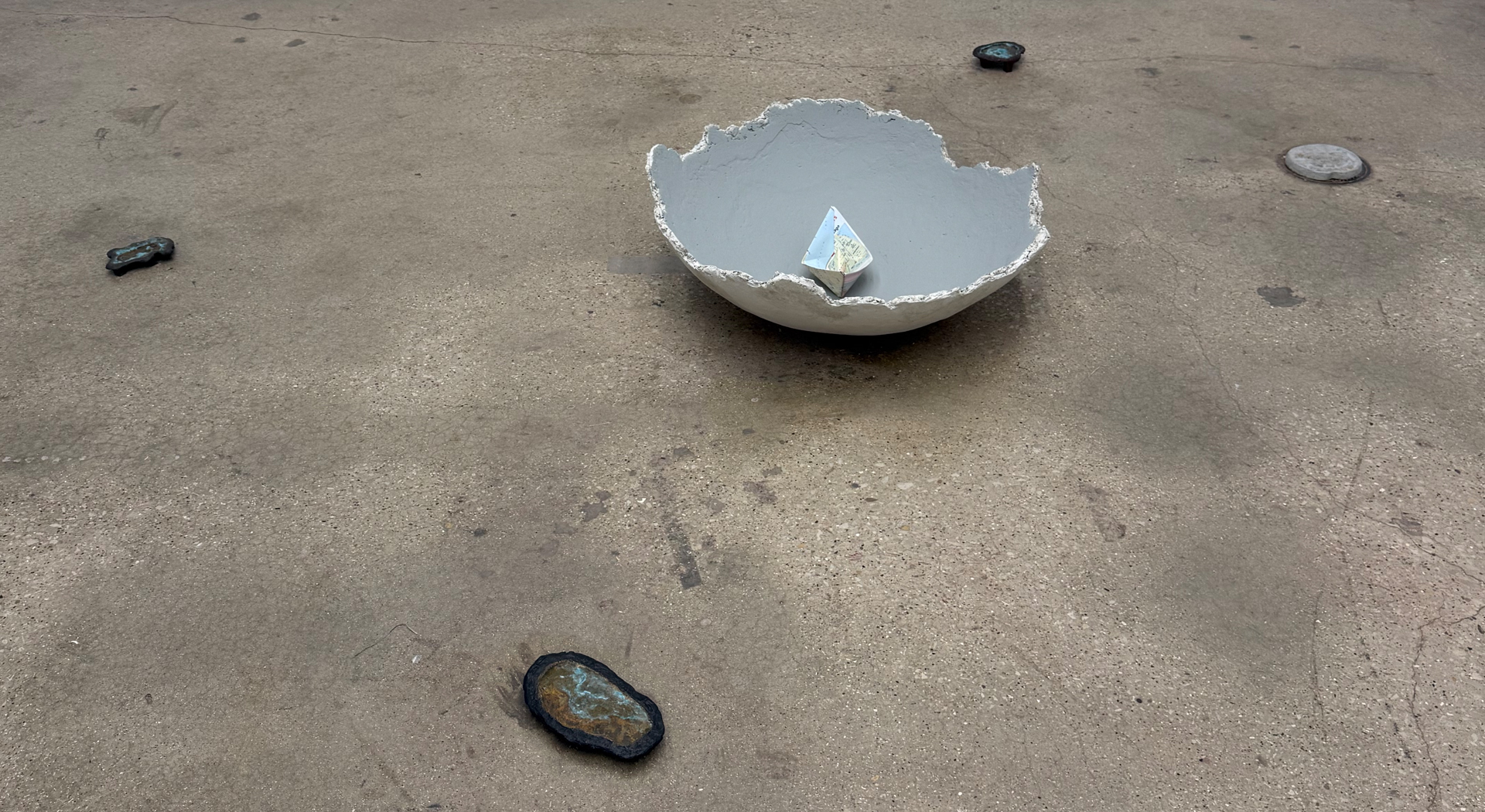
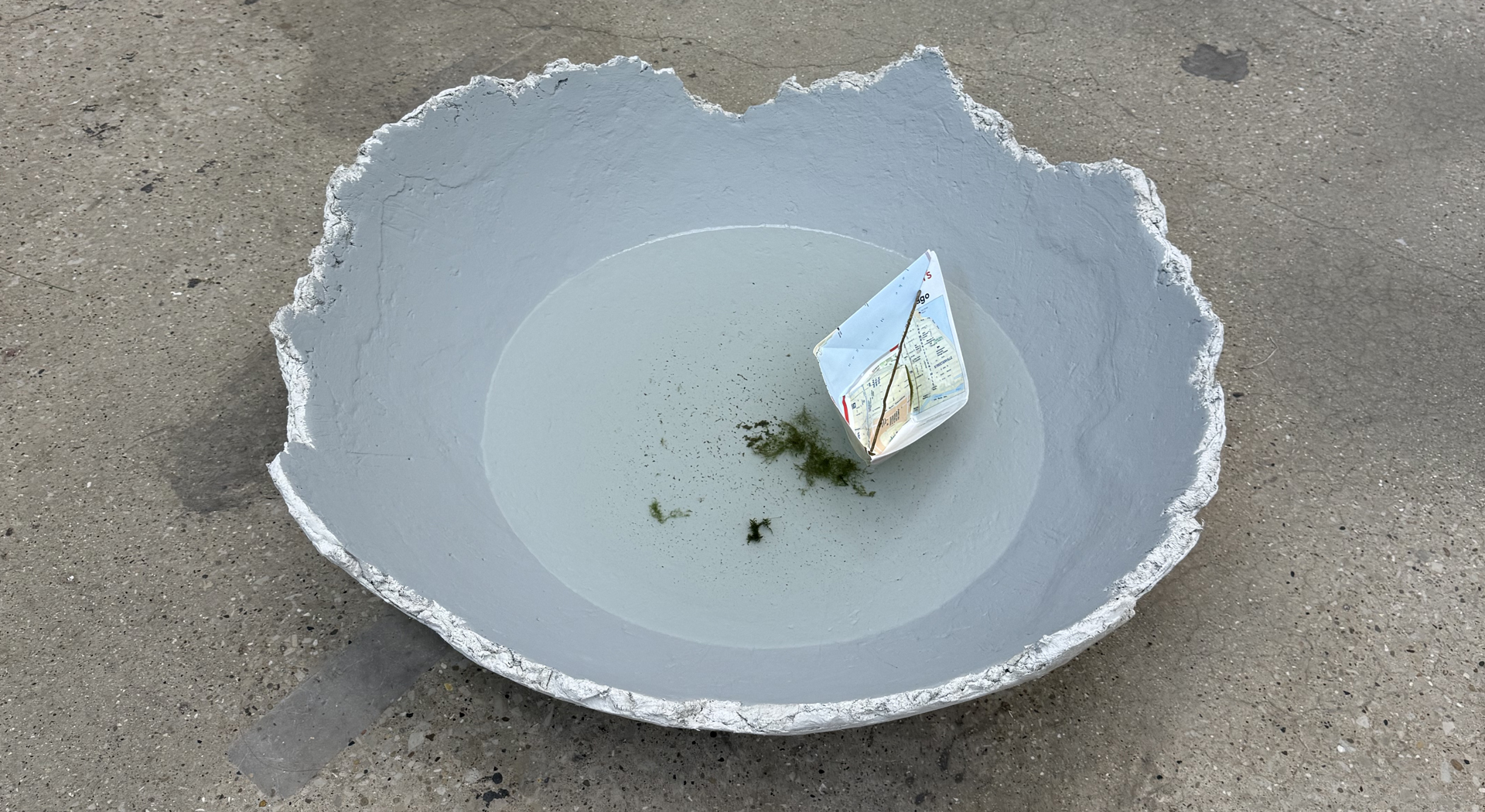
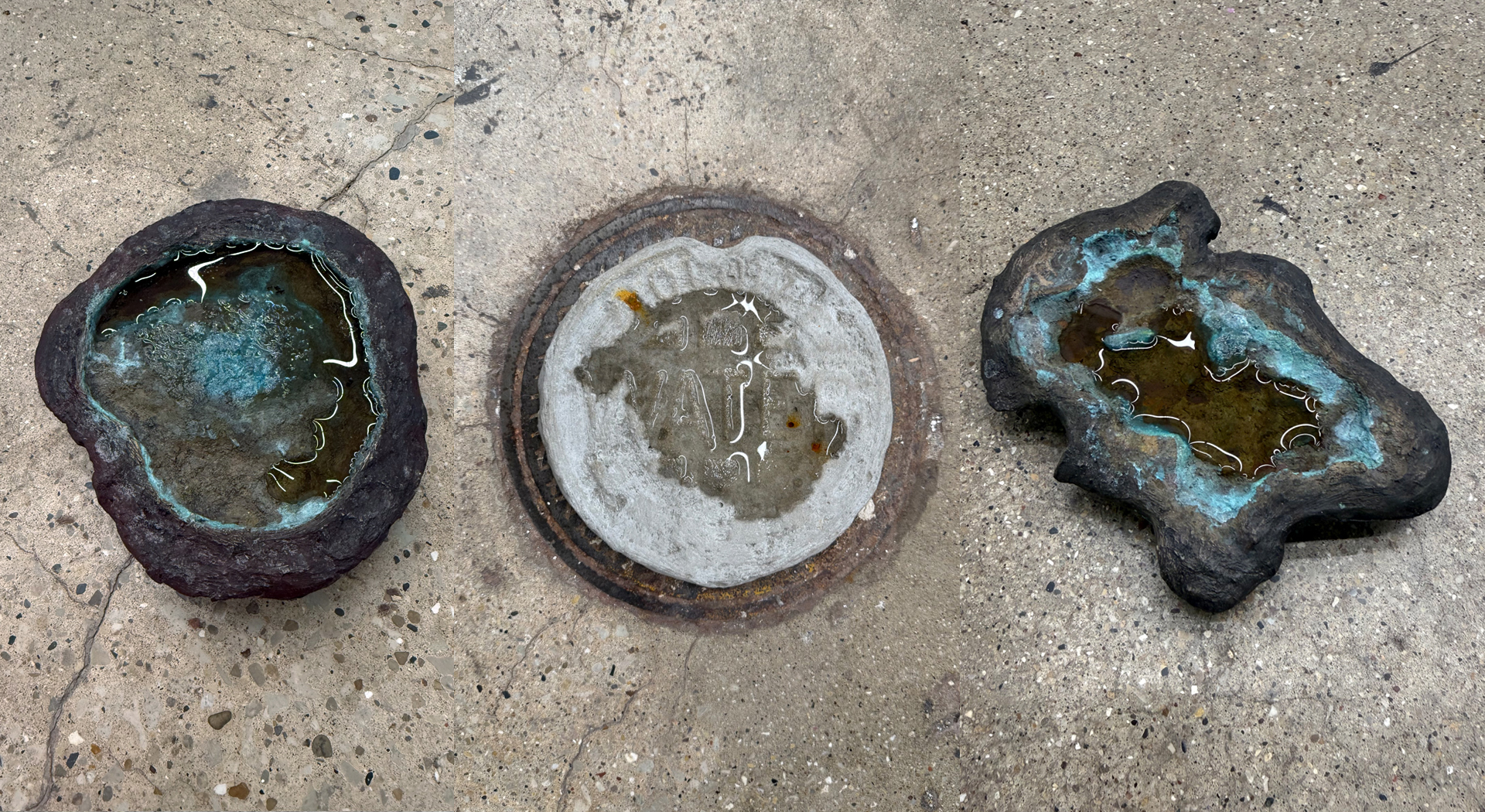
Through ongoing embodied practices—walking, kayaking, casting, collecting, and documenting—I make space for the Chicago River’s agency and for stories that resonate with queer migrant experiences. The installation begins with a natural compass crafted from a Chicago map folded into a boat, a magnetized wire found in the river as the needle, and a papier-mâché vessel. This compass probes boundaries: absence, loss, and separation, as well as orientation and the search for belonging. Bronze casted potholes and a metal water cap casted in concrete bear the traces of water and time, capturing the water’s agency through physical sampling. Water collected from the Chicago River at Pilsen, North Michigan Avenue, and South Columbus Drive carries the memories and characteristics of these places—sediments. The water remains active within the installation, capable of staining, corroding, and transforming the work over time. In this way, the water acts as a collaborator, forming a natural patina on the bronze and imprinting marks on the cement.
The installation also features a curated collection of found objects sourced along the river through magnet fishing and site visits. These metal fragments—gifts from the river—reflect industrial histories, urban debris, and the city’s enduring memory. They are remnants of what the city leaves behind and what the river preserves. Thus, the river becomes an archive, safeguarding traces and residues that tell stories of water intervention and the gradual accumulation of layered histories within its current.